Beyond the Daily Puzzle: Strategic Workforce Planning
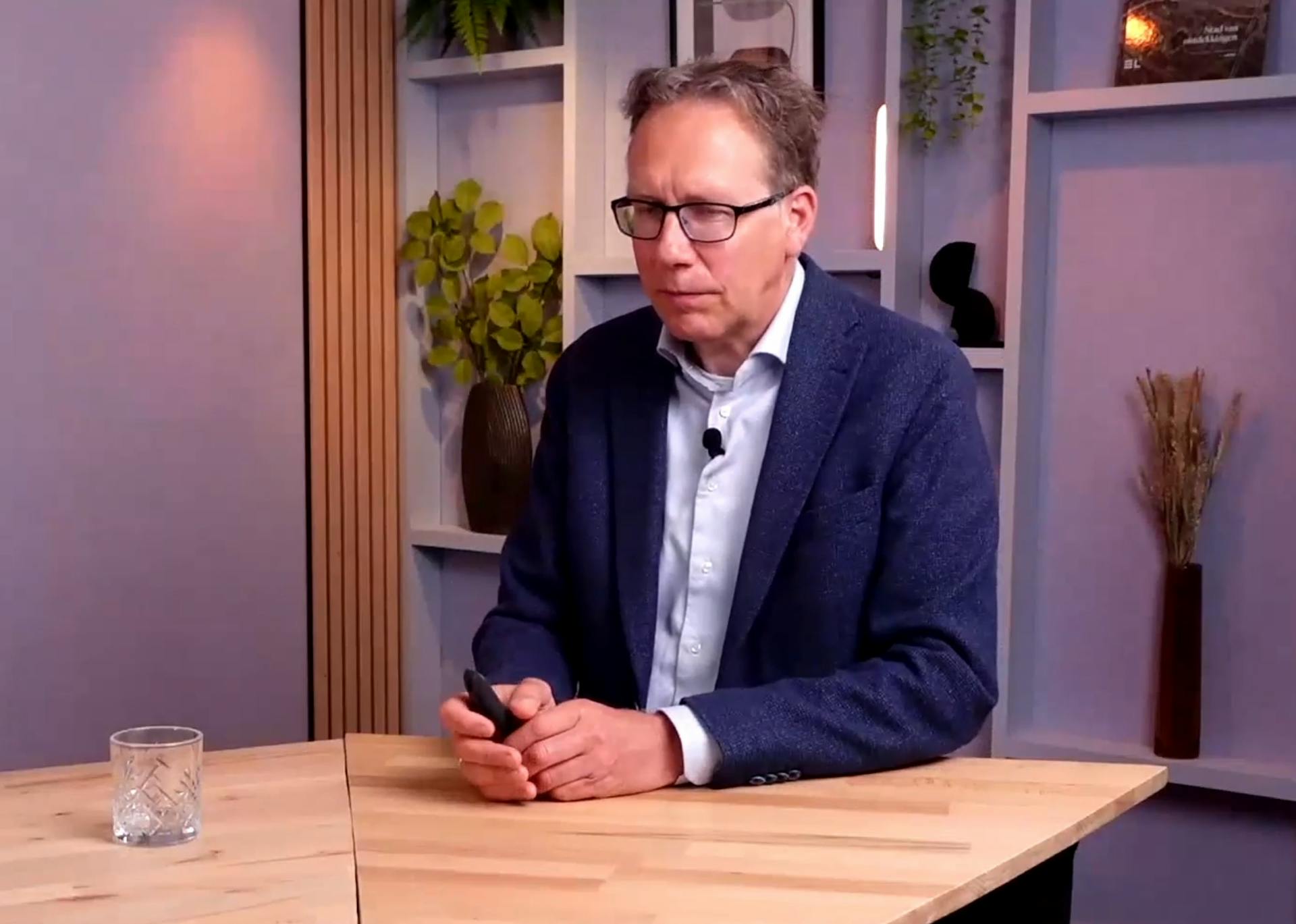
In large distribution centers, forward-thinking strategies are crucial for ensuring long-term success. Suzanne Thomasson explains how strategic workforce planning helps companies navigate uncertainty, address staff shortages, and meet evolving market demands. “Building a robust workforce capable of adapting to change is fundamental. Companies that think ahead today will thrive tomorrow.”
Suzanne is a Senior Business Consultant Strategic Workforce Planning and Retail Industry Expert at ORTEC Data Science & Consulting.

In many organizations, the focus of workforce scheduling lies in solving the operational puzzle on a day-to-day basis, usually within the boundaries of inflexible budgets and expected SLAs, while forgoing the investment in long-term strategic and tactical planning needed to optimize the bottom line. This often results in less-than-optimal usage of the flexible workforce layer and a chaotic work environment for the contracted employees.
Suzanne Thomasson, Strategic Workforce Planning at ORTEC, sees strategic workforce planning as essential to shifting this mindset. By looking months, or even years, ahead to workforce needs and developing scenarios, businesses can better align their staff with anticipated changes in customer demand and market trends. “This not only prevents high costs but also leads to improved performance and increased employee satisfaction,” says Thomasson.
"There’s a growing awareness that your workforce composition directly impacts your operational KPIs."
Keep Reading for the full interview, and Thomasson's answers to questions about why forward-thinking strategies are crucial and their impacts on supply chain planning and operations.
Discussion Highlights
1. Most workforce planning still happens one week at a time. Short‑term focus often drives higher costs and limits flexibility.
2. Strategic workforce planning looks months or years ahead. It aligns staffing decisions with expected demand and business plans.
3. Workforce composition matters as much as headcount. The mix of permanent and flexible staff shapes cost, service, and stability.
4. Staff shortages make reactive planning expensive. Last‑minute labor solves today’s problem but creates tomorrow’s risk.
5. Automation changes workforce needs, not the need for people. Human roles remain essential alongside automated systems.
6. There are multiple ways to achieve the same service level. Each option carries different cost and flexibility trade‑offs.
7. HR and operational decisions are tightly connected. Planning them separately leads to missed opportunities and higher risk.
8. Data reveals workforce patterns that manual planning cannot. These insights support more consistent and defensible decisions.
9. Scenario planning exposes risks before they reach operations. Leaders can adjust staffing strategies early, not under pressure.
10. Strategic workforce planning supports performance that lasts. The goal is balance between cost control, service levels, and workforce stability.
What is Strategic Workforce Planning?
Strategic workforce planning involves managing staffing needs for the long term, typically months to years in advance, from a supply/demand perspective. “We notice that strategic workforce planning tends to be overlooked because the focus is usually on short-term planning,” Thomasson explains. Long term planning is done, but it is not supported by the same data-driven insights as advanced short-term planning. By taking a data-driven holistic approach, with the aid of machine learning and advanced scenario management, significant benefits can be achieved. “Our goal is to strike a data-driven balance between staffing demand and supply over an extended period.”
What Factors Must Companies Consider for Workforce Planning?
- Turnover: How many people leave the company and when?
- Absences: How much of the workforce will be on vacation, ill, or on maternity/paternity leave?
- Composition: How many permanent versus flexible staff are needed? What's the ratio of full-time to part-time employees?
- Service level: What is flexible and what not? Where can flexible choices be made?
“You aim to configure your workforce so you’re ready for whatever the future holds,” Thomasson says. This process closely aligns with an organization’s business plan, and can extend from one to even two years into the future. “Two years is genuinely long-term, but certainly achievable. You have to keep in mind how long employees generally stay with your company.”
Distribution centers face challenges like staffing shortages, high costs of temporary workers, and significant turnover. “Employees often switch jobs quickly for better pay or more pleasant working conditions,” notes Thomasson. Meanwhile, global uncertainty requires companies to build resilient workforces capable of handling various future scenarios.
Why Does Automation Demand Strategic Insights?
Automation is increasingly significant in distribution centers. Companies like Albert Heijn and Hoogvliet invest in automated systems to control labor costs and shortages. However, automation isn’t a cure-all, Thomasson notes. “At Albert Heijn, only a portion of products can be processed by robots. Humans must still handle the rest.” Automation impacts the ideal make-up of the workforce, resulting in a need to recalibrate the ‘new optimum’.
How Do You Anticipate Workforce Changes?
The World Economic Forum predicts that AI and automation will create 12 million more jobs than they eliminate by 2025. “This suggests that companies advancing these technologies will positively contribute to society in the long run,” Thomasson says. Automation will inevitably alter job needs, both in quantity and nature. “How extensively will robots replace employment? How will the type of work change? Strategic workforce planning is vital precisely to prepare for these shifts.”
Strategic workforce planning is particularly relevant for distribution centers, where shifts in labor demand and automation have a direct operational impact, and where service levels need to be carefully weighed. Viewing this challenge through a more holistic lens reveals a key insight. Thomasson says there are multiple ways to achieve a certain service level: “You could hire an army of flex workers that cost a fortune, and don’t show the same efficiency as an experienced, own workforce. Or vice versa; many fixed employees that get the job done in an efficient way, but don’t give the same amount of flexibility as flex workers. Striking that balance is essential in achieving operational excellence at acceptable costs.”
Thomasson advocates for an integrated approach that aligns HR and operational KPIs. “Currently, these metrics are often tracked in isolation,” she explains. “Our goal is to connect them. Which contract mix yields the highest productivity? Is it more cost-effective to absorb a temporary dip in production or bring in a high-cost, last-minute flex worker? These are the kinds of trade-offs we help organizations evaluate.”

Suzanne Thomasson, ORTEC
"Strategic workforce planning connects customer demand, operational capacity, and staffing. It's holistic thinking instead of separate puzzle pieces."
What are the Benefits of Strategic Workforce Planning?
- Cost optimization: A holistic long-term planning helps to optimize the balance in contracted workforce and flex workers, leading to lower cost and better availability & productivity.
- Employee satisfaction: Enough work, at the desired time, with the desired flexibility. Meeting these criteria significantly improves employee satisfaction and loyalty.
- Operational performance: Data analysis uncovers patterns, such as the ideal mix of experienced permanent staff and flexible young talent. “It’s like assembling the best soccer team,” Thomasson says. Identifying bottlenecks early allows businesses to anticipate challenges and form teams aimed at operational excellence. “An excessively expensive workforce can perform perfectly but is unsustainable. A too inexpensive workforce damages your performance. It’s all about balance.” Thomasson compares it to sales & operations planning, but for HR. “It connects customer demand, operational capacity, and staffing.”
What are the Keys to a Successful Implementation?
ORTEC’s extensive experience in strategic workforce planning provides key building blocks for successful implementation:
- Demand forecasting: Predicting labor requirements and workforce changes, including absenteeism and vacations.
- Scenario management: Developing plans robust enough for different future scenarios.
- Data analysis and machine learning: Discovering workforce patterns leading to optimal performance, such as the ideal mix of contract types and skills.
What is the Role of Machine Learning in Strategic Workforce Planning?
Machine learning plays an increasingly crucial role, Thomasson explains. “It helps identify patterns: which team or contract composition yields the best results?” Additionally, machine learning improves forecasting and offers proactive support. “A future tool could continuously calculate in the background, alerting you of imminent shortages or surpluses,” she says. “It would act like a personal assistant, integrating HR aspects with operational impacts.”
With machine learning, you suddenly see clearly which team or contract composition genuinely works.
How Does Data Serve as a Foundation for Planning?
Data quality is often a concern in data-driven projects, but is generally not an issue here. “HR data is typically reliable because it’s essential for payroll and other obligations,” Thomasson says. Linking this data to scenarios allows early intervention in staffing costs and capacity. For instance, what happens if you hire more permanent employees or adjust the hiring pace?
How Can You Adapt to Changing Business Needs?
Strategic workforce planning allows businesses to respond to market changes, like e-commerce growth. “During COVID, Albert Heijn saw an explosion in online orders,” Thomasson says. “That changes operational needs. Do you need different skills or more evening staff? You can calculate that strategically.” Distribution centers often require different workforce strategies for online versus offline streams.
What Trends and Challenges Impact Strategic Workforce Planning?
Thomasson highlights trends making workforce planning critical:
- E-commerce and returns: Rapid growth of online retail, and customers who increasingly return their products, add pressure on distribution centers.
- Customers demand frictionless retail: Customers easily switch brands as loyalty declines, making reliability and speed of deliveries crucial.
- Labor shortages: In supply chains and logistics, over one third of company leaders cite a high to extreme shortage of laborers. Rising tariffs push companies to relocate production locally, making local labor even more scarce. According to Deloitte’s 2025 Retail Industry Executive Survey, two-thirds of retail executives invest in workforce hiring, retention, and future readiness. “This topic ranks high on the agenda,” Thomasson confirms.
What About Tailored Customer Solutions?
ORTEC sees substantial opportunities for retailers with distribution centers. “These companies recognize the issues—the shortages of staff, and the high costs of ad-hoc solutions,” Thomasson says. “We propose addressing this earlier in the process to avoid last-minute hiring.” Available HR data allows ORTEC to quickly perform analyses and create scenarios. “We have the technology, data expertise, and sector experience to tailor solutions alongside clients,” Thomasson adds.
How Do We Build a Future-Proof Workforce?
Strategic workforce planning transcends simple staffing. The goal is to provide insight into the entire chain, from customer demand to operational capacity and staffing. With machine learning, scenario planning, and ORTEC’s extensive supply chain experience, companies can control costs, enhance performance, and remain resilient amid uncertainty. “It’s not just about saving money,” Thomasson concludes. “It’s about building a workforce ready for the future, to continue meeting customer expectations.”
Talk to Us About Optimizing Your Supply Chain
Curious How Strategic Workforce Planning Will Benefit Your Organization?
We'd love to explore the possibilities with you and show you how ORTEC can transform your operations to connect daily workforce scheduling with long-term strategic planning. We're ready to get started when you are.