8 Must-Know Trends and 4 Key Insights for Optimizing Finished Goods Logistics in Manufacturing in 2026
Read time: 5 minutesThe manufacturing industry is experiencing increasing complexity in the logistics of finished goods. This creates major challenges for companies that want to reduce costs, improve efficiency, and meet fast-changing market demands. In this article, we examine the key trends and challenges in finished goods logistics in the manufacturing industry. We focus on sustainability, process efficiency, employee and quality engagement, and digital transformation. We also explain how data and mathematics support better decisions, competitive advantage, lower costs, and improved sustainability.
Want to learn more? Read The Comprehensive Guide to Integrated Routing & Loading for Producers about optimizing transportation for efficiency and sustainability for more insights.
Navigating the Latest Trends in Finished Goods Logistics
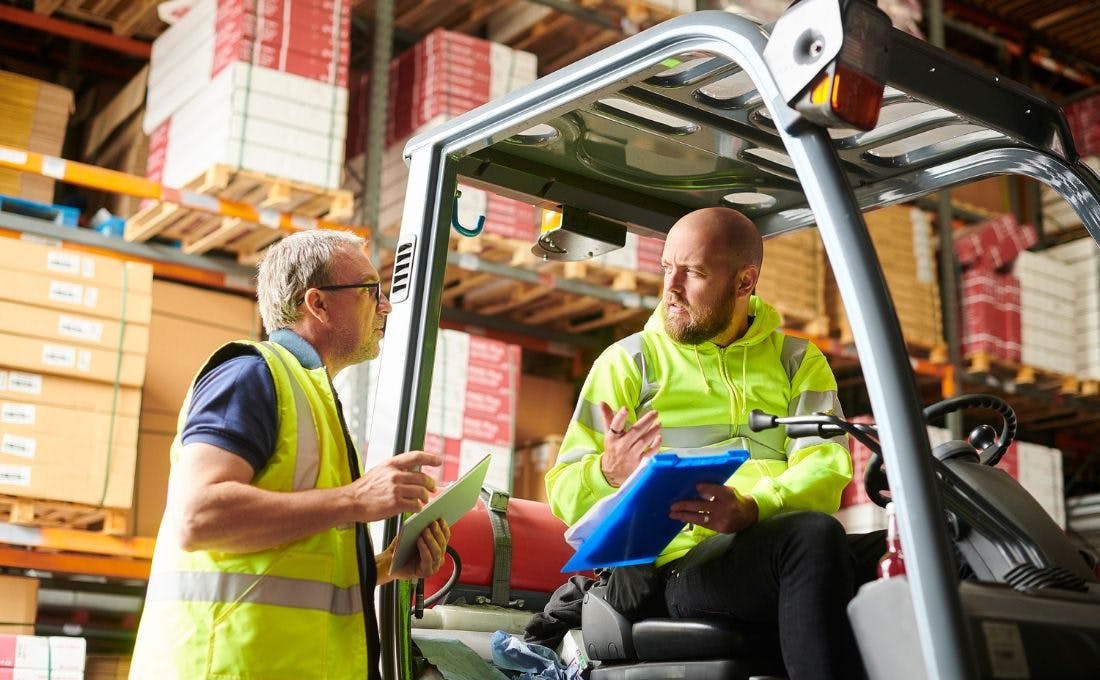
Finished goods logistics in manufacturing includes the management and movement of completed products to the end customer. Core activities include packaging, storage, transportation, and distribution. Recent trends in the manufacturing industry have increased the pressure on logistics operations. Companies now focus on process efficiency, employee and quality engagement, digital transformation, and sustainability.
Data and mathematics support finished goods logistics by creating insights into operations and market behavior. These insights help companies make better decisions, identify inefficiencies, optimize their distribution network, increase supply chain visibility, and improve profitability.
New Trends in Finished Goods Logistics for 2026
The logistics of finished goods continues to evolve rapidly. In 2026, several new trends are reshaping how manufacturers move products efficiently, sustainably, and safely.
1. Predictive and AI-Driven Logistics Planning
Artificial intelligence and machine learning are now used to predict demand, optimize routes, and anticipate capacity issues before they happen. Companies can automatically assign carriers, simulate delays, and adjust schedules in real time. This proactive approach reduces costs and improves delivery reliability.
2. Regionalization and Nearshoring
Global supply chain disruptions have made many manufacturers reconsider long-distance sourcing. Companies are increasingly adopting regional networks and nearshoring to bring production closer to key markets. This reduces shipping time, lowers transport costs, and improves supply chain resilience.
3. Digital Twins and Virtual Supply Chain Models
A digital twin is a virtual model of the supply chain or logistics network. It allows companies to simulate disruptions, test new routes, and plan capacity without impacting real operations. Digital twins help improve decision making, reduce risk, and plan more efficiently.
4. Unified Data Platforms
Companies are adopting centralized digital platforms that connect suppliers, carriers, warehouses, and customers in real time. Unified data improves supply chain visibility, reduces errors, and allows faster, data-driven decisions. Control towers provide a single dashboard to manage shipments, inventory, and exceptions.
5. Micro-Fulfillment Centers and Urban Logistics
To meet rising e-commerce demand, manufacturers are deploying micro-fulfillment centers close to urban customers. These small, automated warehouses speed up delivery, reduce last-mile costs, and increase order flexibility.
6. Packaging Optimization and Sustainable Logistics
Optimizing packaging is now a core logistics strategy. Proper packaging reduces freight weight, cuts transport costs, and lowers CO2 emissions. Combined with green routing, consolidation, and eco-friendly materials, this strengthens sustainable logistics practices.
7. Blockchain for Transparency and Security
Blockchain technology is increasingly used in logistics to increase supply chain transparency, prevent fraud, and ensure accurate record-keeping. This is especially important for high-value or regulated products.
8. Autonomous Vehicles and Last-Mile Innovation
Pilot programs for autonomous trucks and delivery drones are growing. These solutions promise faster, cheaper last-mile delivery while reducing human dependency and errors.
Focus on these four key operational areas in 2026:
These emerging trends show the broader forces shaping finished goods logistics in 2026. To respond effectively, companies should focus on four key operational areas where improvements in processes, employee engagement, digital transformation, and sustainability intersect with these trends.
The following sections explain these four pillars in detail:
1. Process Efficiency
The Fourth Industrial Revolution, also known as Industry 4.0, created new possibilities for automation and data exchange in manufacturing and logistics. In finished goods logistics, Industry 4.0 technologies such as track and trace and system integration help companies gain a clear and complete picture of their operations. With sensors and RFID tags, companies can track products across the supply chain, monitor inventory levels, follow shipments, and identify potential bottlenecks.
The growth of e-commerce also increased pressure on logistics teams to fulfill orders quickly, accurately, and at a low cost. Data and mathematics support better forecasting accuracy, improved distribution network design, and more efficient response to e-commerce demand patterns. By comparing actual data with planned data, companies can improve workforce planning, transport capacity planning, routing and scheduling, and delivery time accuracy.
Production Planning and Forecasting Tools
Accurate order fulfillment depends on production planning software and demand forecasting software that link sales forecasts with required transport and workforce capacity. When companies compare actual data with planning data, they can adjust schedules, optimize transport frequency, and reduce unnecessary labor or mileage. By connecting production planning software and supply chain planning solutions with a transportation management system, companies create a closed loop that supports continuous improvement.
Warehouse Management and Loading Optimization
Warehouse management plays a critical role in finished goods logistics. Warehouse management systems (WMS), combined with advanced 3D packing and loading optimization tools, help increase space usage on pallets and in trailers. This reduces the number of trips, lowers transport costs, and shortens handling time. When a WMS is integrated with a transportation management system, companies can automate load building and allocate transport costs more accurately.
Yard Management
Many manufacturers manage large loading yards where trailers arrive, wait, and move to docks. A yard management system improves the coordination of these movements. It reduces waiting time at the dock, increases throughput, and supports better planning for loading and unloading. Better yard visibility also improves the accuracy of transport scheduling.

2. Employee and Quality Engagement
The manufacturing industry continues to face a shortage of skilled workers. This makes it difficult for companies to maintain smooth operations. Companies need to focus on employee and quality engagement by creating an environment where employees feel valued, supported, and motivated so that retention and productivity improve.
Data and mathematics support employee and quality engagement. By analyzing employee performance and turnover data, companies can identify patterns that indicate the need for better training or engagement initiatives. Mathematical models can optimize shift schedules by considering employee preferences and limitations. This reduces burnout and improves job satisfaction. In addition, data analytics can detect patterns in customer complaints and product returns, so quality improves and customer satisfaction increases.
3. Digital Transformation
Digital technologies, including the Internet of Things (IoT), are transforming logistics across the world. They give companies real-time visibility into their operations, help them predict maintenance needs, and support faster and more accurate decisions. For example, IoT sensors make it possible to monitor equipment conditions, detect failures before they occur, and reduce the risk of downtime.
Robotization is also growing in finished goods logistics. Robotic systems are now used to automate repetitive tasks such as packing, palletizing, and picking. When robots are connected with artificial intelligence and machine learning, they learn from operational data and improve performance over time.
Industry 4.0 supports finished goods logistics through sensors, IoT, AI, big data analytics, and cloud platforms. These technologies help companies identify inefficiencies and implement improvements.
Logistics Software and Transportation Management Systems
Modern finished goods logistics depends heavily on logistics software, including transportation management systems and transport management software. These systems help companies optimize routing, automate carrier selection, reduce empty mileage, and improve delivery accuracy. When a TMS is connected with warehouse management software and production planning tools, companies gain real time supply chain visibility and can use analytics to understand transport costs, shipment performance, and carrier profitability.
Supply Chain Visibility and Control Tower
A growing number of manufacturers use supply chain visibility solutions to monitor shipments, inventories, and assets in real time. A supply chain control tower collects this data in a single dashboard. This allows planners and managers to react quickly to delays, exceptions, and bottlenecks. Higher visibility leads to more reliable operations and stronger customer service.
EDI Integration
Integrating EDI supply chain messages with the TMS and WMS automates the exchange of shipment information and improves communication with customers and carriers.
Supply Chain Optimization Software
By using supply chain optimization software, companies can analyze routing options, evaluate cost scenarios, and calculate profit and loss per order and per customer. These insights support strategic decisions about product portfolios, service levels, promotions, and customer contracts. To benefit from these tools, companies must recognize the value of analytics at the board level and build strong data capabilities.
4. Sustainability
Sustainability is now a major priority for manufacturing companies. Consumers increasingly expect environmentally responsible products. One of the goals of the European Union is to reduce CO2 emissions by at least 55 percent below 1990 levels by 2030. In finished goods logistics, sustainability focuses on reducing environmental impact while still delivering products on time and in good condition.
This field is often described as sustainable logistics. It includes the use of fuel-efficient vehicles, green transportation planning, and eco-friendly packaging materials. Companies can also reduce emissions by optimizing their logistics network, consolidating shipments, lowering empty mileage, and reducing empty space in trucks.
Data and mathematics support sustainability by helping companies analyze energy consumption, identify savings opportunities, and design optimized transportation plans. By adjusting delivery days, loading patterns, and routing decisions, companies can significantly reduce total miles traveled and total emissions.
Conclusion
This article discussed the key trends and challenges in finished goods logistics in the manufacturing industry. We highlighted the importance of sustainability, process efficiency, employee and quality engagement, and digital transformation. We also explained how data and mathematics help companies make better decisions, improve their competitive advantage, lower costs, and increase sustainability.
As the manufacturing industry continues to evolve, advanced technologies such as robotics and artificial intelligence will play a larger role in logistics. At the same time, pressure to meet sustainability targets will lead more companies to adopt sustainable logistics practices and optimized transportation planning.
Data and mathematics will continue to be essential for better decisions, improved performance, and long-term innovation. Companies that use data-driven strategies will stay competitive, flexible, and ready for the future.
Talk to Us About Optimizing Your Supply Chain
Learn more about ORTEC’s smart analytics tools for manufacturing, including the industry’s best-in-class 3D Packing and Loading Optimization solution. Discover how we can help you increase efficiency, reduce costs, lower labor requirements, and gain a competitive advantage.