Why predictive maintenance will define the next 30 years
Data-driven maintenance models already demonstrate clear value by increasing asset reliability, optimizing the use of vessels and improving decision-making around component replacement. With rapid expansion of wind parcs in Asia and a renewed operational focus in Europe, predictive maintenance is becoming a foundational capability for the next phase of offshore wind. The industry’s future performance will be shaped not by how quickly it builds new capacity, but by how intelligently it operates the assets that are already in the water.
Asia continues expanding while Europe enters a new phase
To understand how the two regions have diverged, it is helpful to consider how their respective offshore wind sectors emerged. Europe entered early and now operates the oldest wind parks in the world. This means it is already dealing with questions around asset aging, major replacements, decommissioning and long-term reliability. Asia outside China, in contrast, only began building large-scale offshore wind farms around 2016 and 2017, and the emphasis remains on adding capacity at speed.
When looking at the structural differences, Edgare explains that the two regions are not facing the same underlying energy context. He emphasizes that Europe’s energy system has long included a wide mix of renewable sources. “In Europe, electricity comes from many different renewable sources. There is wind energy on land, wind energy at sea, large solar parks, and solar panels on rooftops. Europe also started switching to renewable energy earlier than many other regions.
In many Asian countries, the situation is different. They still rely heavily on coal or nuclear power, and these large power plants need to be replaced. That cannot be done with lots of small solar panels on individual roofs alone. These countries need very large sources of clean electricity. Offshore wind farms can deliver that. One offshore wind project can produce as much electricity as a large power plant. These projects are usually very big, often producing between 500 megawatts and one gigawatt of power, and they generate electricity reliably for a large part of the time. Another advantage is space. In many Asian countries, land is limited and expensive. Offshore wind farms are built at sea, so they do not compete with land that is needed for housing, agriculture, or industry.”
“This mainly comes down to space and scale. In densely populated countries such as Taiwan, it is difficult to scale up rooftop solar fast enough because there simply is not enough suitable roof space. Offshore wind offers a solution. Large wind farms at sea can deliver substantial amounts of electricity in a single project, without competing for scarce and expensive land. While Europe, including countries like the Netherlands, has already made significant progress in the energy transition, the sense of urgency is higher in Asia. Electricity demand there is still growing, and offshore wind is one of the few options that can provide new capacity at the required scale and speed.”
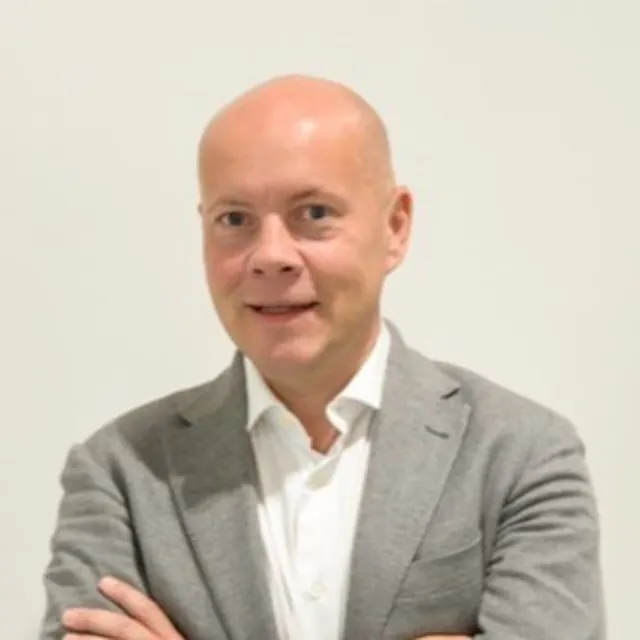
Edgare Kerkwijk, Asia Wind Energy Association
"Operators now ask whether to replace early because a suitable vessel is available, or wait for a failure. The financial impact of that decision can be significant."
Europe’s challenges in a changing market
While negative headlines about project concessions without bidders, cost overruns and write-downs (accounting losses taken when projects turn out to be worth less than expected) have shaped the European discussion, the underlying reasons require a broader perspective. The combination of rising interest rates since COVID-19, supply-chain difficulties and cost increases of up to 40 percent have created significant pressure on long-lead-time projects that rely on stable financial conditions.
Edgare explains that the rapid scaling of turbine technology has amplified this complexity. “Turbines grew from six megawatts to fifteen or twenty within a decade,” he says. “That means new surveys, new cable designs and new grid studies. Developers have become far more selective. Some concession auctions attract no bids, and several companies have written off hundreds of millions on projects still being in development.”
He also points to the global influence of China. “In 2023, China increased its installed offshore wind capacity by about forty percent,” he notes. “European developers, meanwhile, are still tied to tariff structures from 2017 while their costs have risen sharply. That combination has created real pressure." Even so, Edgare expects conditions to improve as the supply chain stabilizes. “Vessel availability is increasing, costs are coming down and major turbine manufacturers have passed through the most difficult phase,” he says. “In Asia, countries like China, Taiwan, Korea and Japan continue building because they simply need more electricity, whether fossil or renewable.”
Moving from construction to long-term operations
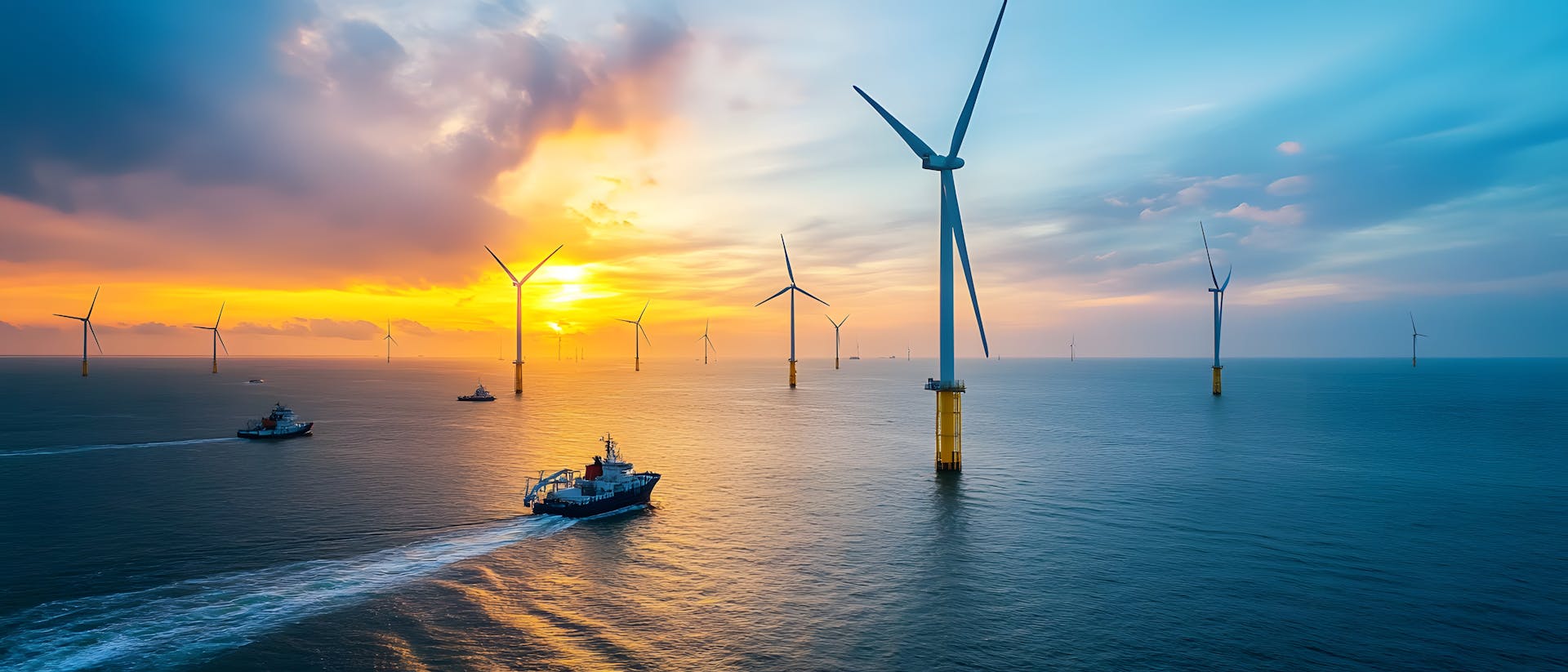
Across regions, offshore wind is moving into a new operational phase. Turbines are becoming larger, wind parks are being built closer together and the focus is shifting toward maintaining reliability over decades. Larger turbine sizes make maintenance strategies more important and more complex than before.
Edgare explains what this means in practice. “We’ve seen periods of lower wind speeds than expected, and wake effects are increasing as parks are built closer together. New turbines models are scaling so quickly that recalls and technical issues occur across all major manufacturers. You could repair a six-megawatt turbine with a simple crew transfer vessel. For a twenty-megawatt turbine, you need a heavy-lift vessel. Operators now ask whether to replace early because a suitable vessel is available, or wait for a failure. The financial impact of that decision can be significant.”
These operational decisions are shaped not only by technical considerations but also by regional logistics. “In Europe, if a UK park has an issue, Dutch vessels or Danish technicians can help,” Edgare explains. “In Asia, that often isn’t possible due to flag rules and local content requirements. That’s why countries are now exploring regional supply chains and shared vessel pools.”
As a result, conference discussions across Asia and Europe increasingly revolve around operations, monitoring, reliability and maintenance strategies rather than purely construction schedules.

Floris van den Broek, Senior Business Consultant at ORTEC
"The shift toward predictive maintenance is one of the most important developments in the sector."
Using data to improve every decision
From Floris’ perspective, the shift toward predictive maintenance is one of the most important developments in the sector. He explains that turbine manufacturers collect enormous volumes of sensor data, but rapidly evolving turbine designs mean that long-term datasets are often limited and limit the applicability across projects. As a result, operators increasingly want contractual access to their own asset data so that they can build internal knowledge and develop their own predictive models.
In discussing ORTEC’s work, Floris describes how decades of maintenance planning experience from the oil and gas sector are now being transferred to offshore wind. “We’ve worked with Shell for 45 years on long-term asset planning. For offshore wind, we co-developed a turbine-positioning model that doesn’t rely on a rigid grid. Instead, we optimized placement based on dominant wind directions. It creates a more organic pattern that reduces wake effects and increases yield by three to six percent.”
Predictive maintenance also has major implications for maintenance campaigns. “By careful modelling, we can analyze when components are likely to fail and compare the cost of early replacement with the risk of waiting,” Floris explains. “By clustering maintenance tasks into campaigns, one vessel can work efficiently across multiple turbines for several weeks. That often saves multiple vessel days and enormous cost. It’s vital to assess different scenarios and determine the point at which preventive replacement is more cost-effective than corrective repair.”
Edgare sees governments in Asia actively facilitating these developments. “In Taiwan, the government is developing platforms where operators can share data in exchange for better predictive models. It improves efficiency across the sector. Governments often take the initiative here and then invite industry to participate.”
Offshore wind is no longer an experiment. It is critical infrastructure. And critical infrastructure should be managed with data, not intuition.

Looking ahead
According to Edgare, Asia’s growth trajectory remains strong. “Taiwan is nearing four gigawatts and will reach five by the end of the year,” he says. “After that, the country plans to add one to one and a half gigawatts annually, aiming for twenty to forty gigawatts by 2050. Korea continues to build and has eight gigawatts in the pipeline. Japan is resolving auction issues. The Philippines has already issued many permits. Vietnam has the best wind resource in Southeast Asia and an existing maritime industry. And China continues to dominate, exporting turbines up to forty percent cheaper than its Western counterparts.”
Europe’s progress will depend heavily on market reforms and investment conditions. Despite the current sentiment, Edgare believes that economic fundamentals remain strong. “Renewable energy is often the cheapest option. Companies like Amazon, Microsoft and major data centers are signing corporate PPAs. Demand will continue to grow.”
Floris sees the coming years as a period in which operations will become the defining theme of the sector. “As supply-chain constraints ease, the focus shifts to maintaining high availability and reducing lifetime costs. Asia can take the lead because it can adopt the most modern O&M practices from the beginning.”
Edgare concludes: “Offshore wind is no longer an experiment. It is critical infrastructure. And critical infrastructure should be managed with data, not intuition.” Floris adds: “The turbines are there. The real work now is turning every sensor value into a better operational decision.”
About Edgare Kerkwijk
Edgare Kerkwijk has lived in Singapore since 1996. After ten years at Rabobank working in mergers, acquisitions and project finance across Southeast Asia, he moved into renewable energy. He first focused on biofuels and carbon credits and, from 2012 onward, developed wind and solar projects in Indonesia, Thailand, the Philippines and Singapore. He founded the Asia Wind Energy Association in 2017, organizes major regional conferences such as the Asia Offshore Wind Days and publishes six widely read daily and weekly newsletters.

About Floris van den Broek
Floris van den Broek is Senior Business Consultant in the Energy team of ORTEC’s Data Science & Consulting department. His experience spans applications of mathematics and physics for clients in the offshore wind, utilities, and conventional oil & gas businesses, with a particular focus on scheduling, value chain, and market intelligence projects.