Why Is Store Delivery Efficiency a Retail Priority?
Today’s shoppers expect speed, availability, and flexibility—whether they buy in-store, click-and-collect, or via home delivery. At the same time, stores face staffing shortages, smaller backroom space, and stricter municipal delivery regulations.
Store delivery optimization isn’t just about logistics anymore—it’s a competitive differentiator. Advanced planning tools help retailers keep shelves stocked, reduce late arrivals, and align transportation operations with store realities.
How Can Retailers Use APS to Manage Delivery Peaks?
Retailers often struggle with uneven workloads—overloaded routes on promotion days and underused fleets on others. APS platforms smooth this out through data-driven scheduling:
- Analyze store-level demand patterns and delivery history.
- Set optimal frequencies and time slots based on traffic, stock levels, and local restrictions.
- Automatically adjust for seasonal events and store-specific requirements.
This enables stable, repeatable delivery flows that benefit warehouse teams, drivers, and in-store staff alike—while lowering logistics costs by 5–10%.
What Makes Dynamic Routing More Effective Than Static Planning?
Static “master routes” lack the flexibility to respond to daily volume shifts, road events, or store constraints. Dynamic route optimization software recalculates routes in real time, factoring in:
- New orders and load volumes.
- Live traffic conditions or roadblocks.
- Specific vehicle and dock constraints at each store.
With dynamic APS routing, fleet utilization rises, empty miles drop, and service levels improve—even during unplanned disruptions or volume spikes.
How Does End-to-End Optimization Remove Supply Chain Bottlenecks?
Store delivery is only part of the equation. APS platforms take a network-level view of your retail supply chain, optimizing across:
- Distribution center scheduling and loading.
- Vehicle and driver assignments.
- Return logistics and backhauls.
For example, 3D load planning tools factor in temperature zones, stacking limits, and even return packaging. Planners can coordinate multiple deliveries, cross-docking stops, and return loops—helping maximize fleet output and reduce warehouse congestion.
How Does Real-Time Visibility Improve Retail Execution?
An APS-powered control tower connects warehouse managers, dispatchers, drivers, and store staff in real time. Stakeholders gain immediate insight into:
- Live delivery ETAs and progress.
- Delay alerts and rerouting updates.
- Dock assignments and unloading schedules.
For retailers, this means fewer store disruptions, improved planning accuracy, and better collaboration across teams—especially during high-volume periods like holidays or major promotions.
How Does Data Help Retailers Continuously Improve?
APS tools capture detailed performance data across every delivery cycle. Retailers can use this for:
- Plan vs. actual comparisons to identify delays or inefficiencies.
- Predictive analytics to fine-tune demand forecasts and delivery timing.
- Cost-to-serve modeling to evaluate each store’s delivery profitability.
By continually learning and adapting, retail supply chains can shift from reactive logistics to proactive, scenario-based planning—making operations more resilient and cost-efficient over time.
Which Retailers Are Already Seeing Results?
ASKO, a leading grocery distributor in Norway, uses APS from ORTEC to dynamically plan daily multi-stop routes across challenging geographies. They’ve paired real-time planning with continuous improvement initiatives to reduce fuel use and support sustainability goals.
Carrefour Italy integrated APS across 1,100+ stores, improving visibility, vehicle utilization, and delivery predictability. Their APS system allowed dispatchers and store teams to track deliveries in real time and respond faster to service issues—while reducing costs and unnecessary mileage.
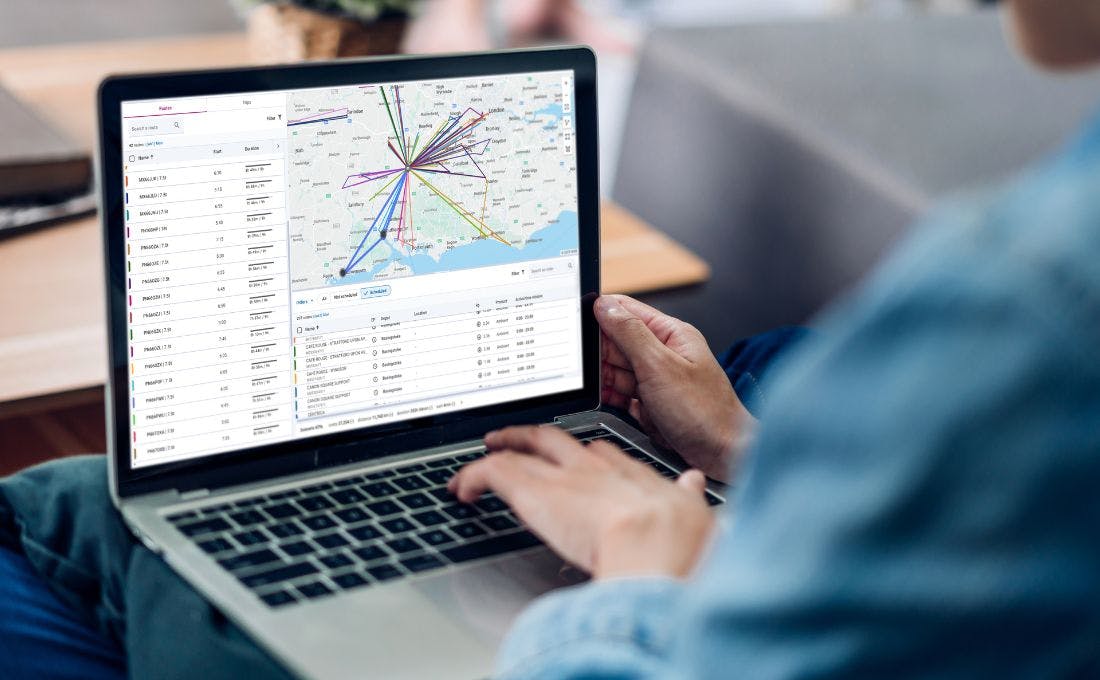
Ready to Take the Next Step in Delivery Optimization?
Modern store delivery optimization goes beyond TMS and manual planning. With advanced planning solutions, retailers can increase on-time performance, streamline operations, and cut unnecessary costs—while delivering a better experience to customers and store teams alike.
Contact us today to learn how APS can optimize your delivery routes, warehouse workflows, and supply chain performance.