Mastering Multi-Site Catering Planning
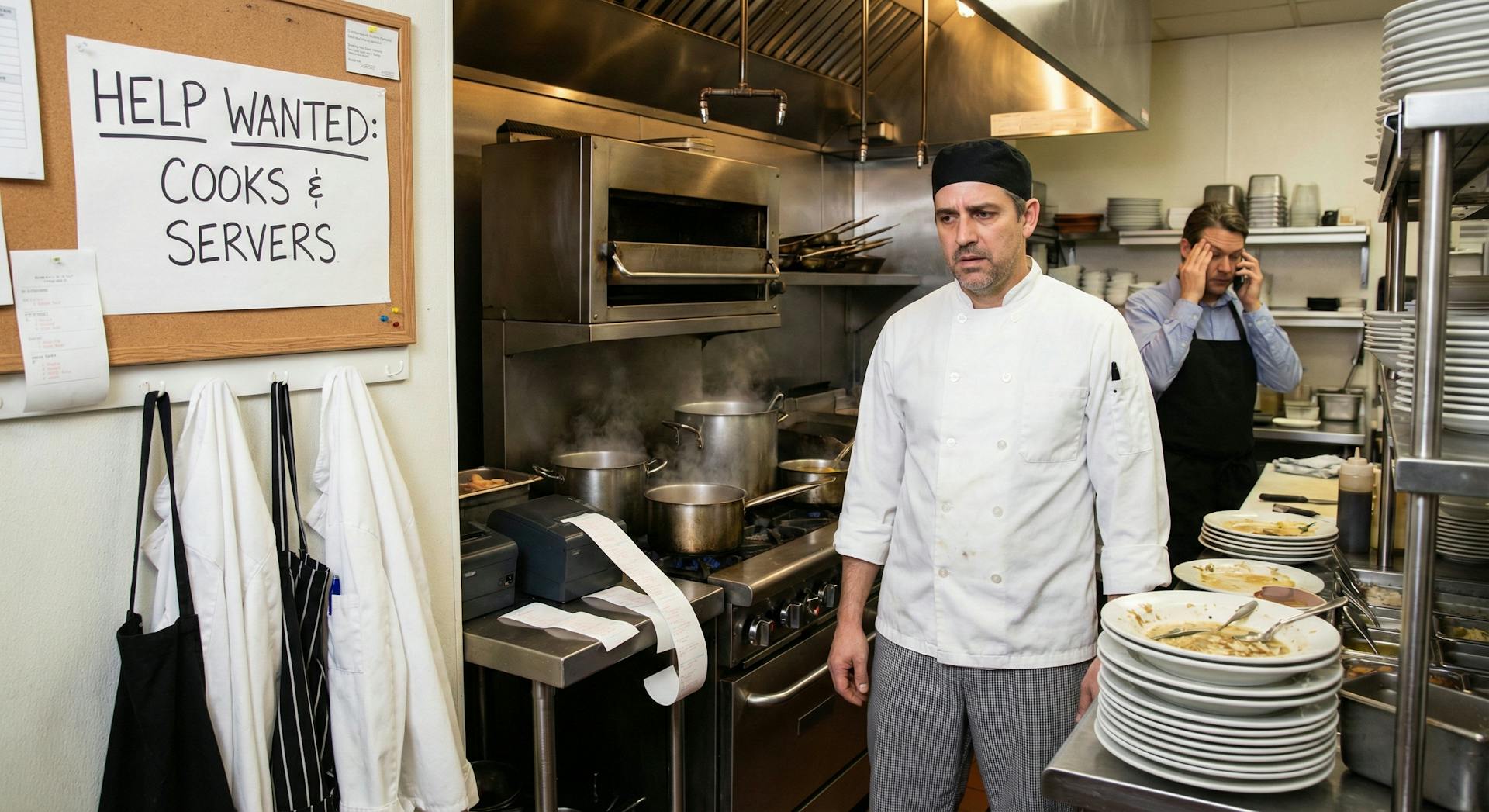
Read time: 5 minutesThe catering industry is currently navigating a "perfect storm." With tight profit margins and many employers citing staff shortages as a major obstacle to operations, the margin for error in workforce planning is non-existent.
On December 9, ORTEC’s Industry Leader Wessel Winkelhuijzen and Account Manager Paul Alsemgeest hosted a deep-dive webinar into solving this puzzle. The consensus? The traditional way of planning—isolated by location—is broken. The future lies in multi-site optimization and unlocking the potential of your existing workforce.
Here are the key takeaways and practical solutions from the session.
1. The Paradox of the "Labor Shortage"
One of the most striking statistics shared during the webinar challenges the narrative that "there are simply no people." While shortages are real, there is a massive amount of untapped capacity within current payrolls:
- 20-25% of current employees want to work more hours per week.
- 7-10% are willing to work more than 10 extra hours a week.
The Problem: In a traditional planning setup, a manager at Location A might be hiring an expensive temp agency worker to fill a gap, while an employee at Location B (just a few miles away) sits at home wishing for an extra shift.
The Solution: Visibility.
By moving from siloed planning to a regional/multi-site view, organizations can match this "hidden" internal supply with demand, drastically reducing reliance on the 25% of the workforce that typically consists of temporary agency staff.
2. The Spiral of Complexity
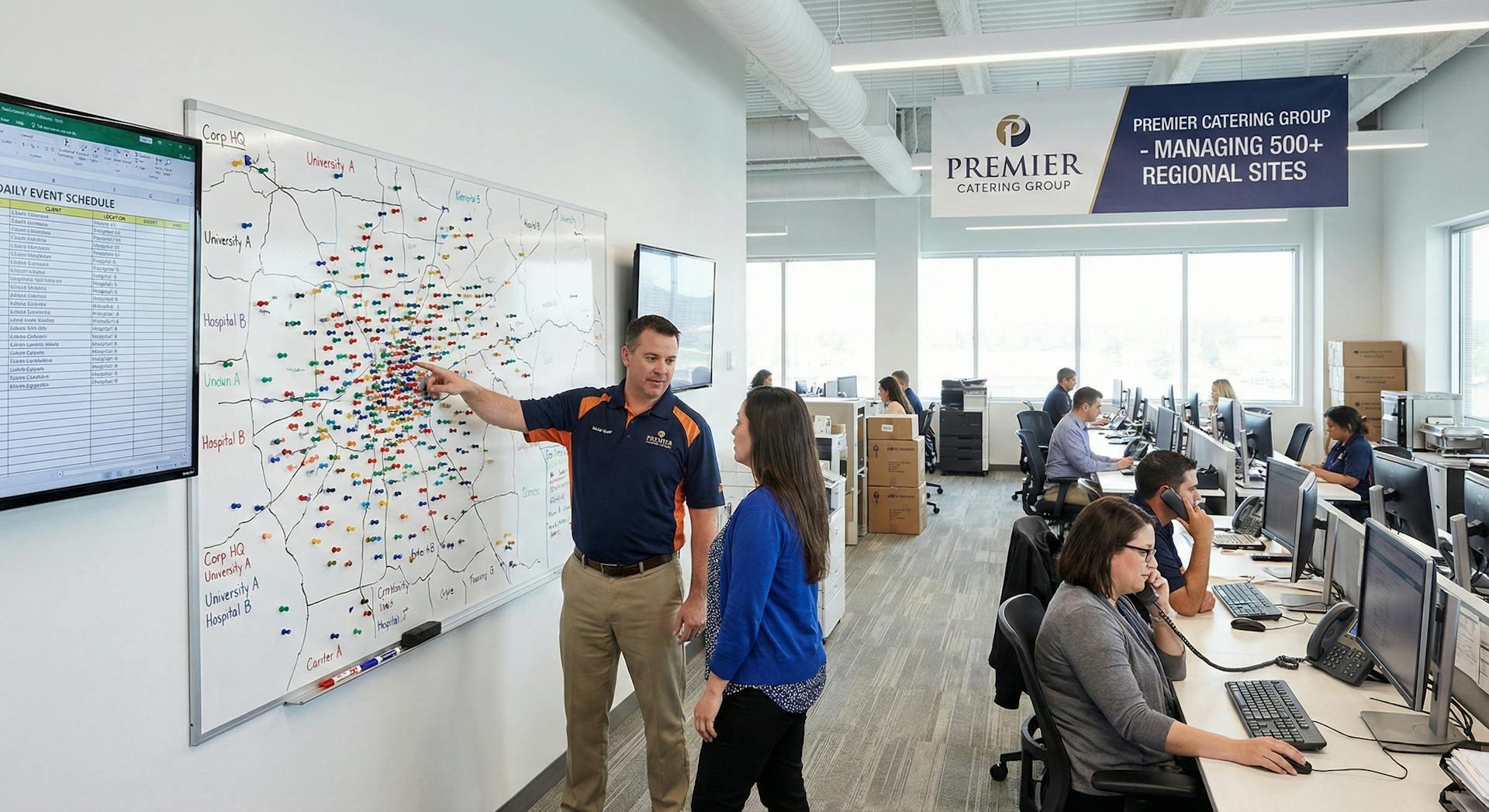
Why is this so hard to achieve manually? The presentation highlighted that complexity in catering doesn't grow linearly; it spirals.
- Scale: Large caterers often manage up to 500 different locations.
- Compliance: Planners must juggle multiple Collective Labor Agreements (CLAs), skills requirements, and strict working time regulations (which 25% of organizations inadvertently violate).
- Volatility: Forecasting is often revenue-driven and erratic.
When you add employee preferences and last-minute sickness to this mix, manual planning becomes a game of "filling holes" rather than "optimizing resources."
3. The Methodology: The Continuous Loop
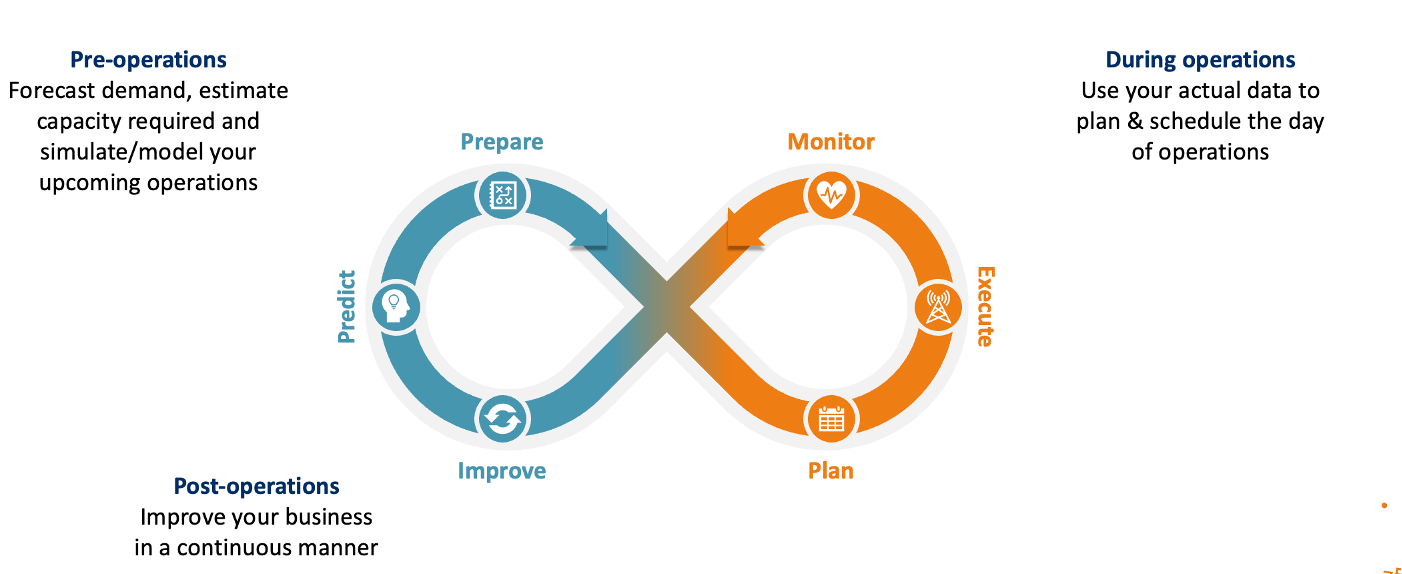
Wessel introduced ORTEC’s philosophy for breaking this cycle: The Predict → Prepare → Plan → Execute → Monitor → Improve loop.
Crucially, this moves planning from a static admin task to a dynamic business driver.
- Predict: Translate revenue forecasts directly into required shifts/headcount.
- Prepare: Estimate the capacity needed versus available.
- Plan: Use algorithms to match the puzzle pieces.
- Execute: Empower employees to manage the day-to-day (swaps/bidding)
4. In Practice: Moving from Local to Regional Planning
During the software demonstration, the difference between "keeping the lights on" and "strategic optimization" became clear.
The Regional View
Instead of looking at one location, the planner dashboard allows for a "Region View" (e.g., grouping 4-5 nearby catering sites). If Catering Location 1 is understaffed, the system instantly identifies eligible employees from Catering Location 2 or 3 who have the right skills and availability.
- Result: A shift is filled by a permanent employee (lower cost, higher engagement) rather than an external temp.
The Optimizer
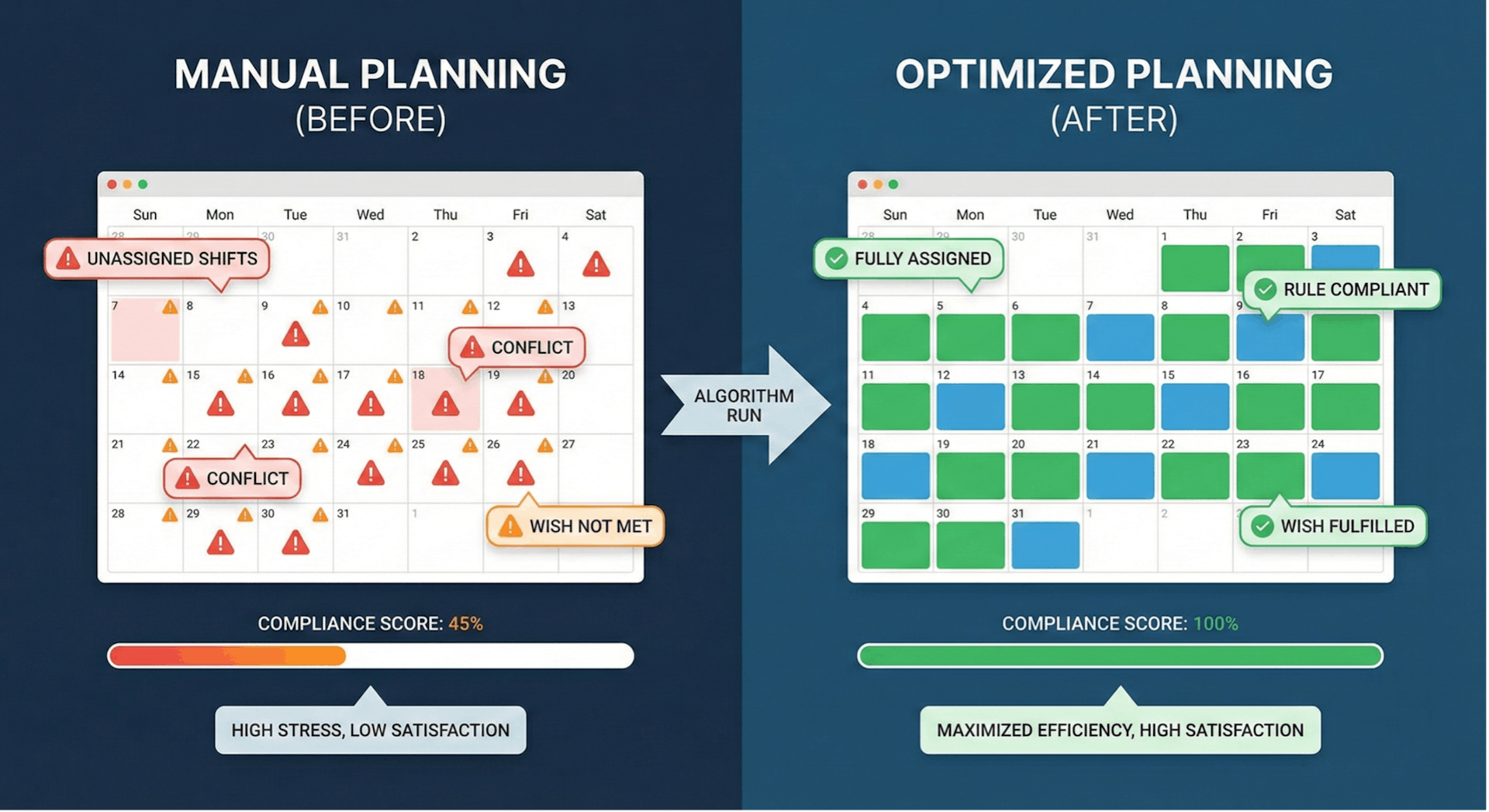
The demo showcased the "Optimizer" engine. Unlike a human who stops planning once the schedule is "full," the optimizer continues to calculate millions of possibilities to increase the "schedule score." It balances:
- Hard Constraints: Labor laws and contract hours.
- Soft Constraints: Employee wishes (e.g., "I prefer working at Location B, but I am open to Location A").
- Fairness: Ensuring unpopular shifts are distributed evenly over time.
5. Employee Empowerment: The "Uber-ization" of Shifts"
Retention is just as critical as recruitment. To keep staff engaged, the modern planning process must be mobile-first and transparent.
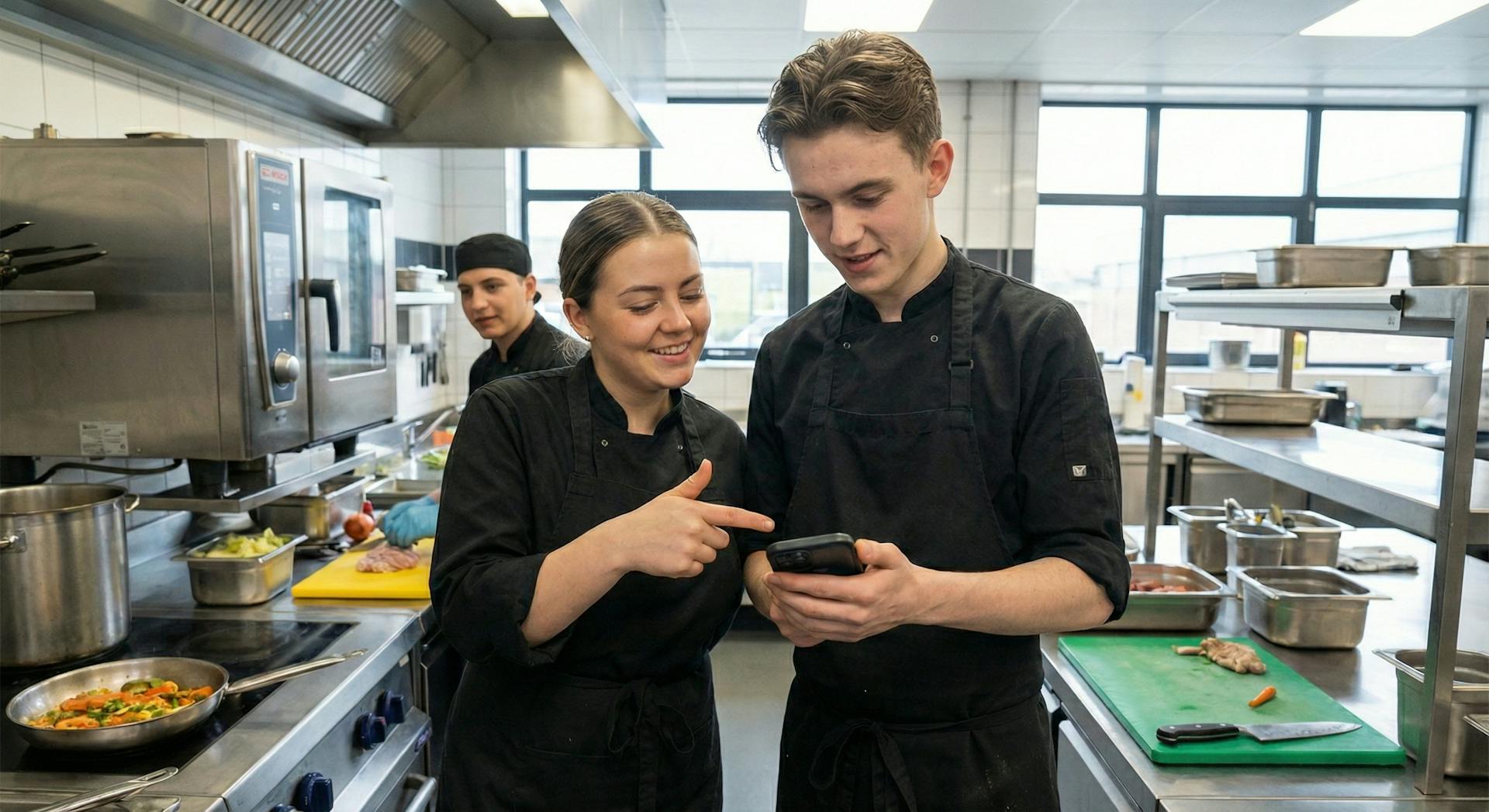
- Shift Bidding: When a shift opens up (due to sickness or a new event), it is published to the app. Employees can "bid" on it. This creates a sense of autonomy—they choose to work, rather than being ordered to.
- Swapping: Employees can arrange swaps (e.g., "Ruben swapping with Christine") directly in the app. The manager only needs to click "Approve," removing the friction of endless WhatsApp groups and phone calls.
- Availability: Employees can lock in unavailability for personal reasons, preventing scheduling conflicts before they happen.
6. The Bottom Line: ROI and Strategic Benefits
Moving to an integrated, multi-site planning solution offers tangible returns for Facility Services companies:
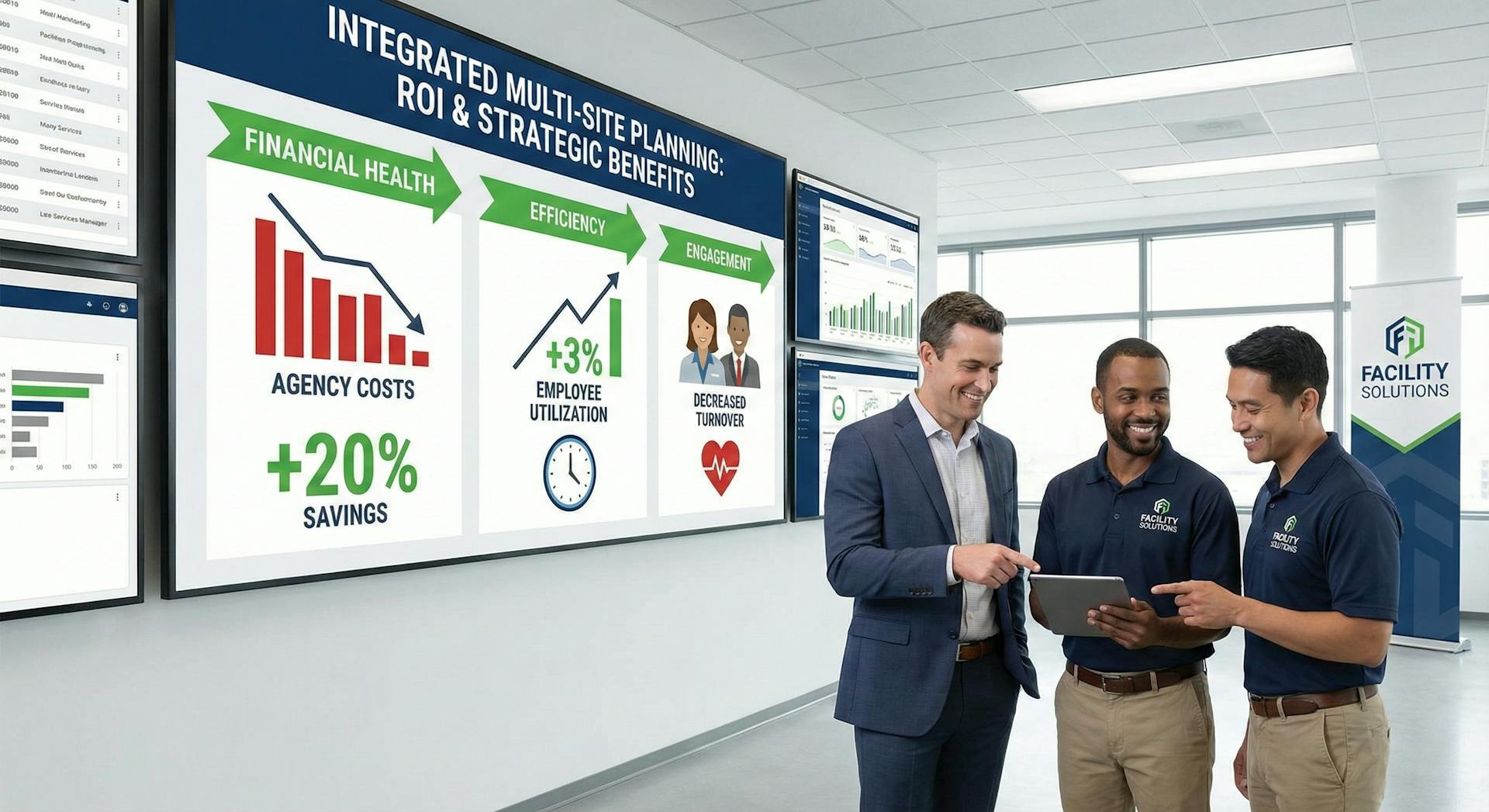
- Financial Health: Potential for 20% or more in cost savings by reducing temp agency usage and overtime.
- Efficiency: A 1-3% improvement in employee utilization (getting more value from contracted hours).
- Engagement: "Happy employees result in happy customers." By granting more influence over work-life balance through self-rostering and swapping, staff turnover decreases.
Conclusion
As the webinar concluded, the message was clear: The catering industry can no longer afford to plan in silos. The capacity to solve staff shortages often already exists within the organization; it just needs the right technology to be seen and utilized.
By adopting a multi-site approach and intelligent software, catering companies can transition from constantly fighting fires to building a resilient, cost-effective, and happy workforce.